T4 ARTIST CASE STUDY: Daido Moriyama
- Mar 7
- 4 min read
Updated: Apr 8

Daidō Moriyama (b. 1938, Osaka Japan) is one of the most influential street photographers of the twentieth century. He began photographing during a period when Japan was undergoing rapid cultural and social change. Cities such as Tokyo were expanding quickly and everyday life was becoming shaped by mass media, advertising, and Western influence. These conditions strongly shaped Moriyama's practice. Rather than photographing the city in a traditional documentary way, he approached it as a place of encounters. Much of his work focuses on the streets of Tokyo, particularly Shinjuku, where nightlife, crowds, and neon light create a sense of tension and unpredictability.
Moriyama's photographs are known for their raw and gritty appearance. He often uses strong contrast, deep shadows, and heavy grain, producing images that feel unstable and immediate. The photographs are frequently blurred or loosely framed, giving the impression that they were captured quickly while walking through the city. This visual language became associated with the Japanese concept are-bure-boke, meaning grainy, blurry, and out of focus. Instead of seeing these qualities as technical mistakes, Moriyama embraced them as part of the emotional language of the photograph. The result is a body of work that feels spontaneous and direct, reflecting life on the street.
The atmosphere of Moriyama's photography often recalls the visual mood of film noir. Many of his images are taken at night and rely on dramatic lighting from streetlamps, shop windows, and neon signs. Shadows dominate the frame and figures appear suddenly before disappearing again into darkness. This approach creates a sense of mystery and unease, as if the city itself is full of hidden stories. His photographs rarely explain what is happening. Instead, they present fragments of moments that feel unresolved. This ambiguity is an important part of his work because it invites viewers to interpret the image rather than simply read it as a clear narrative.
Moriyama's practice is closely connected to the act of wandering. He has often described himself as a stray dog walking through the streets with a camera. This idea reflects his instinctive way of photographing. Rather than planning images carefully, he moves through the city and responds to whatever he encounters. People, shop signs, reflections, animals, and passing gestures all become potential subjects. The camera acts almost like a sketchbook that records impressions of the city as they happen. Through this method Moriyama captures the feeling of urban life rather than a precise description of it.
Several of his projects demonstrate how far he has pushed the photographic medium. One of his most famous photographs is Stray Dog from 1971. The image shows a tense, grainy photograph of a dog looking directly toward the camera. The photograph has become an iconic symbol of his work and of post-war Japanese photography more broadly.

Another important project is Farewell Photography from 1972. In this photobook Moriyama deliberately allowed the images to break down visually. Some photographs appear almost abstract due to extreme grain, overexposure, or chemical marks. The work challenges the idea that photography must produce clear and stable images.


Figures 3, 4, 5, 6, 7 & 8: © Daido Moriyama, From his series Farewell Photography (1972)
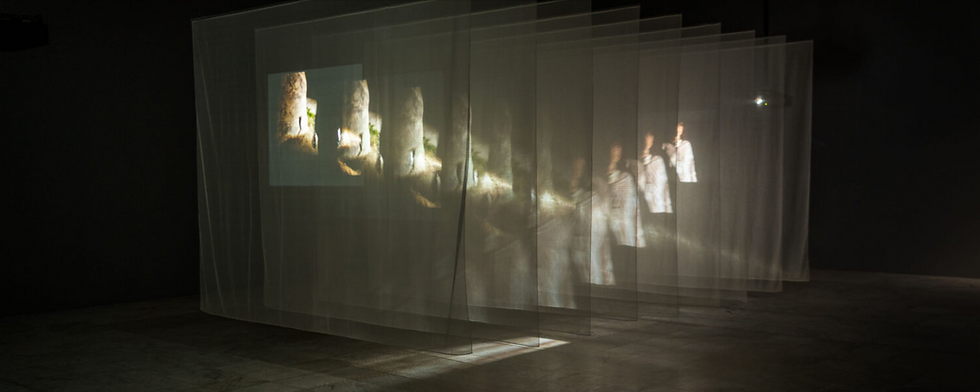
Moriyama has also experimented with the way photographs are presented in exhibitions. Many of his later exhibitions use large-scale prints or silkscreen images on canvas. These installations transform the photographs into immersive visual environments rather than simple framed prints. Projects such as Pop Noir and SCENE show how his images can function across different formats and materials while maintaining the same raw energy that defines his practice.

Looking at Moriyama’s work gives me a strong sense of how photography can operate beyond documentation. What stands out most is his freedom in the way he photographs. He does not try to control every detail of the image. He accepts accident, movement, and imperfection as part of the process. This approach encourages a more intuitive relationship with the camera. It reminds me that photography can be about responding to the world rather than trying to organise it into something perfect.
His work also reinforces the importance of walking and observing. Much of Moriyama's photography comes from simply moving through the city and paying attention to what appears. This resonates strongly with my own interest in photographing everyday environments and capturing fleeting moments as they unfold. The idea that meaningful images can emerge from ordinary spaces is something I find particularly inspiring.
Another aspect that speaks to me is his ability to express atmosphere rather than narrative. Moriyama's photographs often feel emotional and psychological rather than descriptive. They capture the feeling of being in a place rather than explaining what that place is. This approach opens possibilities for thinking about photography as a language of mood.
For my own work, Moriyama offers guidance in trusting the process of experimentation. His photographs show that technical imperfection can become part of the visual voice of an artist. They also demonstrate how a consistent way of seeing can emerge through repeated engagement with a place. His practice encourages me to remain curious, to keep photographing regularly, and to allow the unexpected to shape the direction of my work.
References:
Each Modern 2020, Moriyama Daido: Pop Noir – installation views, Each Modern Gallery, viewed 7 March 2026, <https://eachmodern.com/exhibitions/42-moriyama-daido-pop-noir-pop-noir/installation_shots/>. (Figure 9)
Moriyama, D. n.d., Daido Moriyama official website, viewed 7 March 2026, <https://www.moriyamadaido.com/>. (Figure 1, 2, 3, 4, 5, 6, 7 & 8)
Tate 2012, Artist Daido Moriyama – In Pictures, YouTube, 30 July, viewed 7 March 2026, <https://youtu.be/foWAs3V_lkg>. (Video 2)
Vieira, R.B. 2023, Daido Moriyama Japan, A Photo Theater, YouTube, viewed 7 March 2026, <https://youtu.be/CcPjLSbrpSg>. (Video 1)