

INDUSTRY WK 2: Understanding the Industry – Creative Industries in Flux
- Feb 17
- 3 min read
Updated: Apr 8

The creative industries are currently experiencing rapid change due to technological developments, new economic models, and shifting audience behaviours. Digital platforms such as streaming services, playlist systems, and artificial intelligence have transformed how creative work is produced, distributed, and discovered. These technologies make it easier for artists to reach global audiences without relying solely on traditional gatekeepers such as publishers, record labels, or large institutions. However, they also introduce new challenges. For example, streaming platforms can increase visibility but often generate very small financial returns, raising ongoing questions about fair payment and sustainable income for artists. AI is also reshaping creative labour by generating images, text, and music, which raises debates about authorship, copyright, and the value of human creativity.
Alongside these changes, artists are developing new income streams and professional strategies. Building and maintaining a fan base or audience has also become central to sustaining a practice. Social media platforms, newsletters, and online portfolios allow artists to communicate directly with audiences and supporters, making visibility and engagement an important part of professional practice.
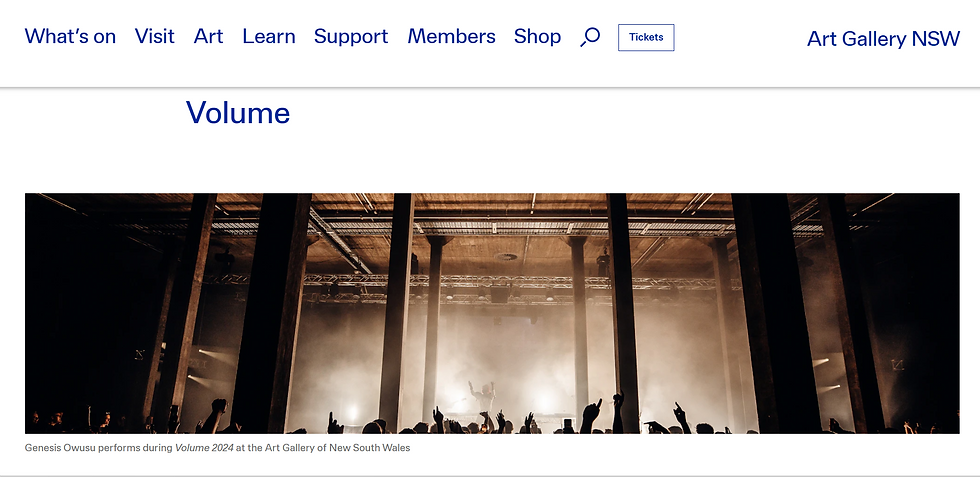
Curated venues and programs continue to play a key role in connecting artists with audiences. Institutions such as the Art Gallery of New South Wales through programs like Volume, and independent cultural spaces such as Phoenix Central Park, a singular vision of Judith Neilson AM, that provides platforms for artists to present work, participate in cultural dialogue, and engage with broader communities. These curated environments help shape how contemporary work is interpreted and experienced by the public.

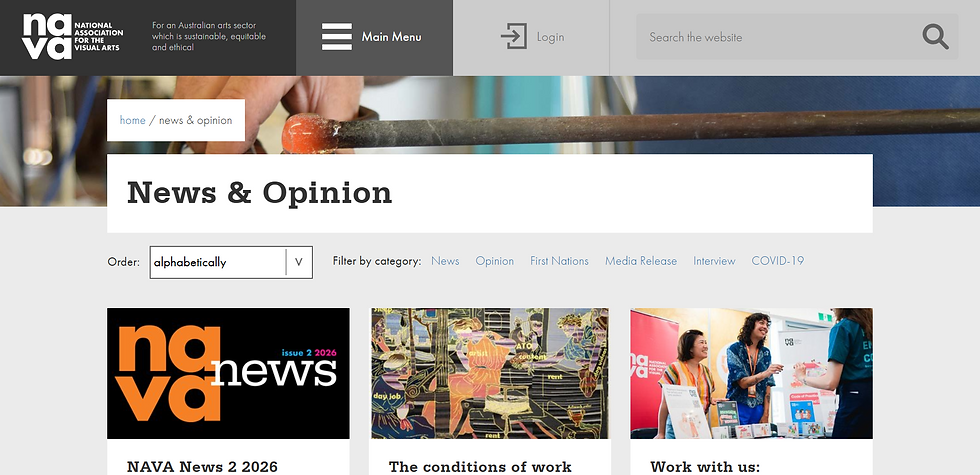
Professional associations also play an important role in supporting artists and advocating for the sector. Organisations such as National Association for the Visual Arts (NAVA) advocates for fair pay, professional standards, and policy development within the visual arts sector. Resources provided by organisations such as Creative Plus Business also assist artists in developing business skills, understanding contracts, and building sustainable creative careers.

These shifts highlight how creative practice today requires more than artistic skill alone. Artists increasingly operate as entrepreneurs who must navigate digital platforms, marketing strategies, funding structures, and professional networks. While new technologies and platforms provide expanded opportunities for visibility and collaboration, they also place additional responsibility on artists to manage their own careers and income sources. Understanding these changing systems is therefore essential for developing a sustainable and adaptable creative practice within the creative industries we see today.
Other important resources:



References:
ACE Open 2025, ACE Open, viewed 18 February 2026, <https://ace.gallery/>. (Figure 9)
Art Gallery of NSW 2025, Volume, Art Gallery of NSW, viewed 18 February 2026, <https://www.artgallery.nsw.gov.au/whats-on/programs/volume/>. (Figure 2)
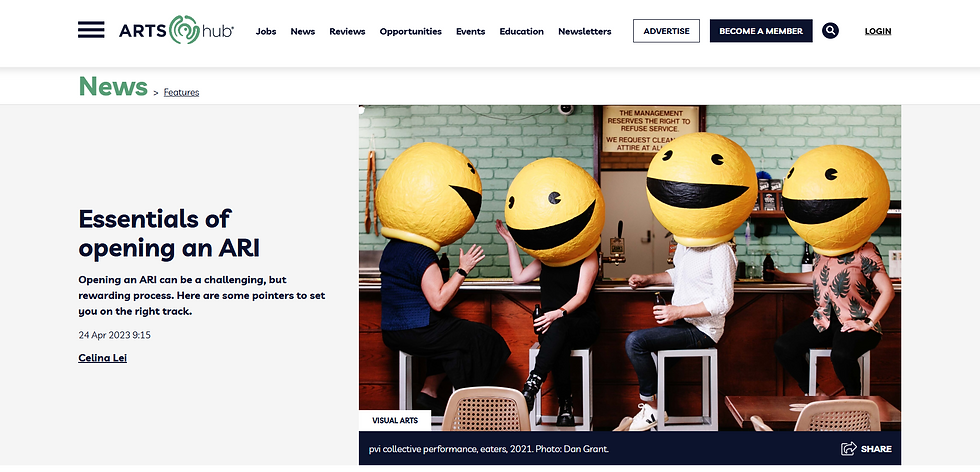
ArtsHub 2024, Essentials of opening an ARI, ArtsHub, viewed 18 February 2026, <https://www.artshub.com.au/news/features/essentials-of-opening-an-ari-2628076/>. (Figure 10)
Creative Plus Business 2025, Resources, Creative Plus Business, viewed 18 February 2026, <https://creativeplusbusiness.com/resources/>. (Figure 5)
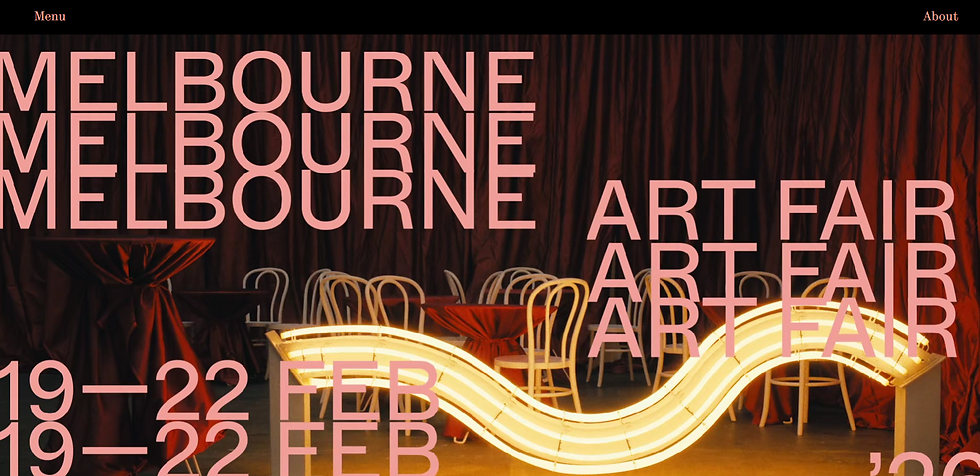
Melbourne Art Fair 2025, Melbourne Art Fair, viewed 18 February 2026, <https://melbourneartfair.com.au/>. (Figure 7)
National Association for the Visual Arts (NAVA) 2025, NAVA, viewed 18 February 2026, <https://visualarts.net.au/>. (Figure 4)
National Association for the Visual Arts 2025, Factsheet: Governance Models, NAVA, viewed 13 March 2026, <https://visualarts.net.au/media/uploads/files/Factsheet_Governance_Models_1.pdf>.
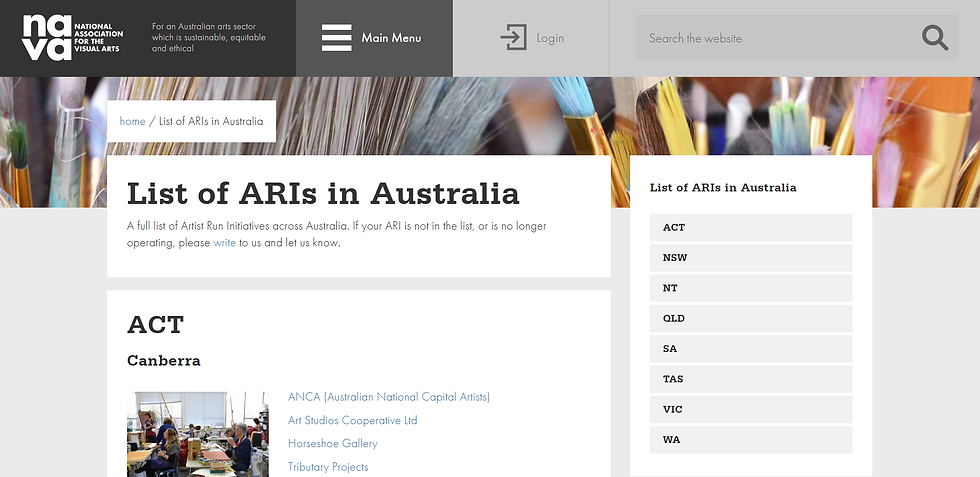
National Association for the Visual Arts 2025, List of ARIs in Australia, NAVA, viewed 13 March 2026, <https://visualarts.net.au/list-aris-australia/>. (Figure 11)
Penny Contemporary 2025, Penny Contemporary, viewed 18 February 2026, <https://www.pennycontemporary.com.au/>. (Figure 8)
Phoenix Central Park 2025, Phoenix Central Park, viewed 18 February 2026, <https://phoenixcentralpark.com.au/>. (Figure 3)
Sydney Contemporary 2025, Sydney Contemporary, viewed 18 February 2026, <https://sydneycontemporary.com.au/>. (Figure 6)
teamLab 2026, teamLab: Kyoto, teamLab, viewed 18 February 2026, <https://www.teamlab.art/e/kyoto/>. (Figure 1)
.


