INDUSTRY WK 1: Entrepreneurship and innovation
- Feb 10
- 4 min read
Updated: Apr 8
Week one introduced the framework for understanding how creative practice sits within cultural policy, institutional structures, and economic systems. The discussion began with the Australian Government's National Cultural Policy — Revive: a place for every story, a story for every place, which outlines how culture is supported through funding, infrastructure, and policy. The policy positions the arts as part of national identity and public life. It also raises questions about access, representation, and the role of institutions in sustaining cultural production.

The article What is Design Thinking and Why Is It So Popular? explains design thinking as a method for solving problems through a process that focuses on understanding users, generating ideas, and testing possible solutions (Friss Dam & Yu Siang 2025). The model outlines stages such as empathise, define, ideate, prototype, and test, which encourage experimentation and revision rather than relying on a single fixed outcome. This approach is useful in the creative industries because it supports collaboration and iterative development. However, the framework also assumes that creative work is directed toward solving a defined problem, which does not always align. Artists often work through open investigation rather than seeking a clear solution. Despite this difference, the emphasis on experimentation, testing ideas, and responding to audiences can still inform how creative projects and cultural organisations develop and engage with communities.
Many Australian galleries operate within this distinction. Another focus was capacity and capability. Cultural organisations must balance artistic goals with operational limits such as staffing, infrastructure, and funding. Most galleries do not operate with unlimited resources. They manage budgets, apply for grants, and build partnerships. This reflects the broader condition of the creative economy described in Australian research on cultural labour and entrepreneurship. Creative work does not exist outside economic structures. Artists, curators, and organisations must negotiate these systems while maintaining artistic integrity.
Operating on a budget was therefore framed as part of creative strategy rather than limitation. Small organisations and artist-run initiatives often demonstrate this clearly. Many programs in regional spaces across Australia operate through collaboration, volunteer labour, and shared resources. These models reveal that sustainability in the arts is not only about funding but also about networks and community engagement.
Video 1: © Simon Sinek, TEDx Talks - Start with why — how great leaders inspire action (2009), YouTube.
In the talk Start with Why — How Great Leaders Inspire Action, Simon Sinek argues that successful organisations and leaders communicate their purpose before explaining what they do or how they do it. Sinek describes this structure through the "golden circle," where the idea of "why" represents the underlying motivation that drives action (Sinek 2009). The argument suggests that audiences connect more strongly with values and purpose than with products or outcomes. However, the talk simplifies complex organisational structures by presenting purpose as the central driver of success. In practice, cultural organisations must also respond to funding structures, policy frameworks, and institutional pressures. Despite this limitation, the concept of beginning with purpose remains relevant because it encourages artists and organisations to clarify their motivations and communicate the broader cultural value of their work.
This framework also connects directly to my own work. The Pictorial Foundation and The Pictorial List operate with a similar structure of purpose. The organisation exists to create platforms for photographers and visual artists through exhibitions, publishing, and community exchange.


Other art industry resources recommended by peers that interested me:



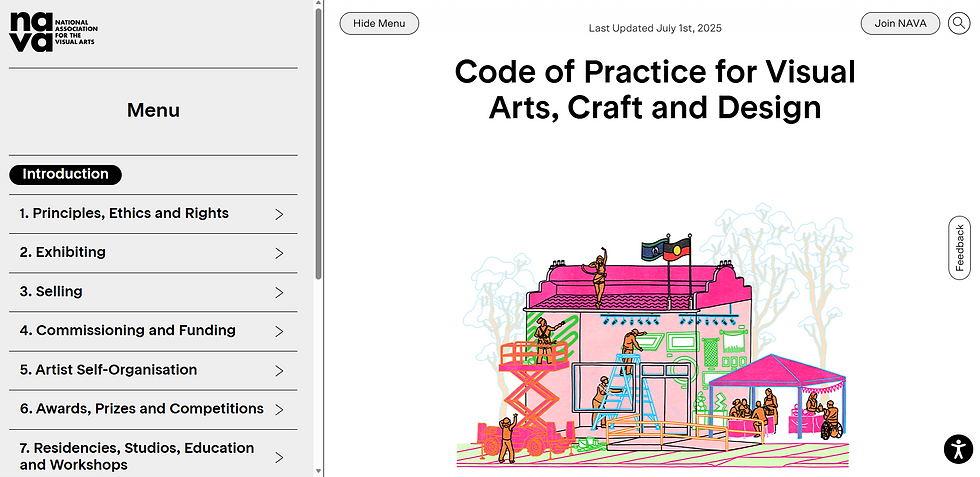
References:
Art Gallery Explorer 2026, Art Gallery Explorer, YouTube channel, viewed 11 February 2026, <https://www.youtube.com/@artgalleryexplorer/videos>. (Figure 5)
Artsy 2026, Artsy, website, viewed 11 February 2026, <https://www.artsy.net/>. (Figure 8)
Contemporary Organisations and Digital Engagement (CODE) Network 2026, CODE Network, website, viewed 11 February 2026, <https://code.visualarts.net.au/>. (Figure 1)
Exhibition with Richard Moore 2026, Exhibition with Richard Moore, YouTube channel, viewed 11 February 2026, <https://www.youtube.com/@exhibition-withrichardmore3929/videos>. (Figure 10)
Friss Dam, R & Yu Siang, T 2025, What is design thinking and why is it so popular?, Interaction Design Foundation, viewed 11 February 2026, <https://ixdf.org/literature/article/what-is-design-thinking-and-why-is-it-so-popular>.
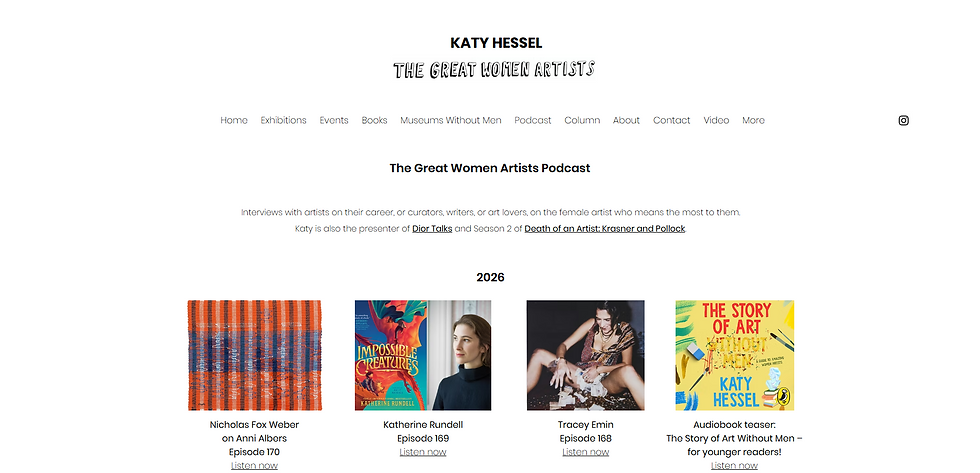
Katy Hessel 2026, The Great Women Artists Podcast, website, viewed 11 February 2026, <https://www.thegreatwomenartists.com/katy-hessel-podcast>. (Figure 6)
Louisiana Channel 2015, 8 Artists Give Advice to the Young, online video, YouTube, viewed 11 February 2026, <https://youtu.be/qyKXw24JX5g>. (Video 2)
National Association for the Visual Arts 2026, National Association for the Visual Arts (NAVA), website, viewed 11 February 2026, https://visualarts.net.au/. (Figure 2)
Pictorial Foundation 2026, Pictorial Foundation, website, viewed 11 February 2026, <https://www.pictorialfoundation.org/>. (Figure 3)
Simon Sinek 2009, Start with why — how great leaders inspire action, online video, YouTube, TEDx Talks, viewed 11 February 2026, <https://youtu.be/u4ZoJKF_VuA>. (Video 1)
Take Two Art Courses 2026, Take Two Art Courses, YouTube channel, viewed 11 February 2026, <https://www.youtube.com/@TakeTwoArtCourses>. (Figure 9)
The Novocastrian 2026, The Novocastrian, website, viewed 11 February 2026, <https://www.thenovocastrian.com.au/>. (Figure 11)
The Pictorial List 2026, The Pictorial List, website, viewed 11 February 2026, <https://www.thepictorial-list.com/>. (Figure 4)
White Cube 2026, White Cube, website, viewed 11 February 2026, <https://www.whitecube.com/>. (Figure 7)