

T5 WK 10: Social Media and Digital Platforms as Art Spaces
- Apr 28
- 9 min read

Social media and digital platforms have reshaped how art is distributed, viewed, and discussed. Platforms such as Instagram, YouTube, TikTok, websites, and virtual galleries allow artists to share work without relying only on traditional gallery systems. This has expanded access for artists who may not have commercial representation, institutional support, or the ability to physically exhibit. It also allows audiences to encounter art across different locations and time zones, making exhibition spaces more immediate, global, and interactive.
Instagram is often used for visual portfolios, process documentation, exhibition promotion, and audience engagement. YouTube allows artists to present video art, interviews, performances, tutorials, and long-form documentation. TikTok has created new possibilities for short-form video, performance, humour, process-based content, and direct communication with audiences. These platforms can turn the screen into an exhibition space, where scrolling, sharing, commenting, and saving become part of how the artwork circulates.
Digital platforms, however, also raise critical issues. Algorithms influence visibility, meaning artists may feel pressured to make work that performs well online rather than work that develops slowly or experimentally. Copyright, image ownership, accessibility, online harassment, and the commercial use of artist data are also concerns. Digital platforms can increase access, but they can also create new forms of exclusion.
Tutorial activity: choose an artist or organisation that uses a digital platform as a space for creating or exhibiting art. Describe which platform they are using — such as Instagram, virtual galleries, websites — and explain how they are using it in a creative or impactful way. Consider what makes their use of the platform effective or engaging for audiences. Reflect on what aspects of their approach you could apply to your own art practice.
THE WRONG BIENNALE

The Wrong Biennale is a strong example of an artist organisation using digital platforms as a primary exhibition space. It describes itself as an international digital art biennial and decentralised platform for contemporary new media culture, connecting artists, curators, institutions, and audiences through online pavilions and physical "embassies."
Unlike a traditional gallery model, The Wrong Biennale operates across websites, digital pavilions, online exhibitions, and networked platforms. This is effective because the structure reflects the nature of digital art itself. The exhibition does not need to be experienced in one fixed location. Instead, audiences can move through different online spaces, discovering video, sound, interactive work, web-based projects, AI-influenced art, and experimental media. The 2025–2026 edition was described as focusing on AI-influenced art, video, text, and sound, showing how the organisation responds to current developments in new media practice.
What makes The Wrong Biennale engaging is its decentralised and open structure. It allows many artists, curators, and digital communities to participate, rather than placing authority only in one institution. This makes the platform feel more expansive and democratic. It also suits audiences who are already used to navigating art through screens, hyperlinks, social media, and online archives.
In my own practice, I could apply aspects of this approach by thinking of digital space as part of the artwork, not only as documentation.
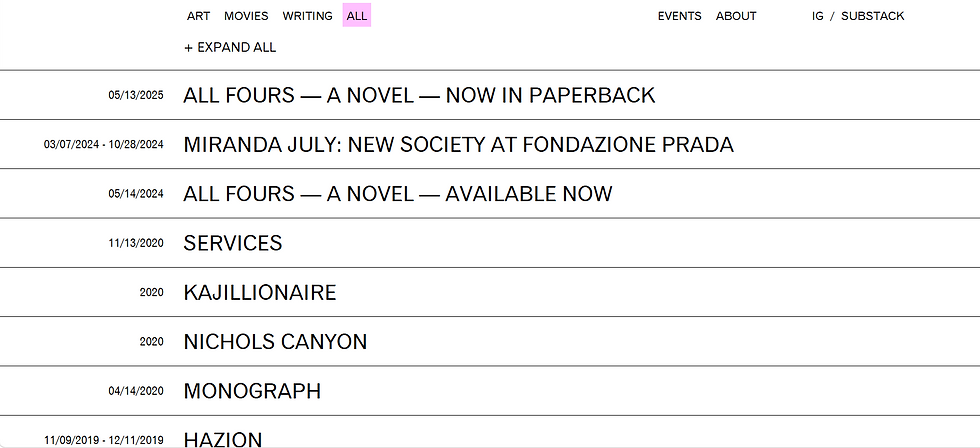
Miranda July is a multidisciplinary artist whose practice moves across film, writing, performance, visual art, digital media, and public participation. Her work is often concerned with communication, intimacy, vulnerability, awkwardness, and the small emotional exchanges that shape human relationships. Rather than separating art from everyday life, July often uses familiar forms of interaction, such as screens, messages, speech, gesture, and online communication, to examine how people connect and misunderstand one another.
July's practice is a significant example for this topic because she understands digital environments as more than places to promote finished work. She treats them as spaces where performance, storytelling, audience participation, and emotional exchange can occur. Her approach shows how the internet can function as a site of encounter, where the audience is not only viewing art but may also become part of its meaning.
Miu Miu's Women’s Tales #8 – Somebody, directed by Miranda July, is an effective example of how fashion film can operate as new media art. The video centres on a fictional messaging service where strangers physically deliver personal messages for other people. This idea critically reflects on digital communication, intimacy, outsourcing, and the awkwardness of human connection. Instead of presenting technology as smooth or efficient, July makes it strange, uncomfortable, and emotionally revealing.
The work moves beyond conventional advertising. While it is commissioned by Miu Miu and features fashion, the clothing becomes part of a broader narrative about relationships, performance, and communication. The short film becomes both artwork and branded content, raising questions about where art ends and marketing begins.

We Think Alone by Miranda July was a strong example of a digital platform being used as an exhibition space. Commissioned by Magasin 3 for On The Tip of My Tongue, the project sent themed collections of emails to subscribers every Monday between 1 July and 11 November 2013. By the end, it had 104,897 readers across 170 countries, showing how email itself became the site of distribution and reception.
The project was effective because it turned a private digital format into a public artwork. July describes email as intimate and almost revealing, while also acknowledging that the selected emails function as a form of self-portraiture.

Ai Weiwei and Avant Arte's Middle Finger is an interactive digital artwork based on Ai Weiwei's long-running photographic series Study of Perspective. In the original series, Ai Weiwei photographs his raised middle finger in front of major landmarks and sites of political, cultural, and institutional power, including Tiananmen Square, the Eiffel Tower, Saint Mark’s Basilica, and the White House. Avant Arte explains that the digital project invites the public to use Ai Weiwei’s own finger from Study of Perspective to “share their point of view,” turning a personal gesture of protest into a participatory online artwork.
Critically, Middle Finger is effective because it transforms a simple bodily gesture into a global act of resistance. The middle finger becomes a symbolic tool for questioning authority, institutional power, nationalism, surveillance, and obedience. The project is also important as new media art because the website becomes the exhibition space. Instead of viewing Ai Weiwei’s protest as a fixed photographic series, audiences are invited to contribute their own image and position themselves within the work.
The project also raises questions about whether online participation can produce genuine political action or whether protest becomes simplified into a shareable digital gesture. While the work is visually direct and accessible, its power depends on whether audiences engage critically with the systems they are challenging, rather than only repeating the symbol.



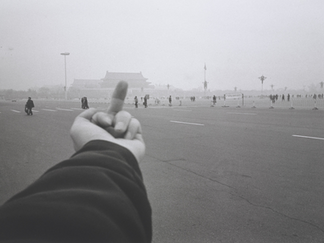


Figure 7-9. Ai Weiwei and Avant Arte, Study of Perspectives (2023)

Amalia Ulman is an Argentine-Spanish multidisciplinary artist whose practice moves across performance, photography, video, installation, film, internet art, and social media. She is important to discussions of social media and digital platforms as art spaces because she treats online identity as something constructed, performed, edited, and consumed. Her work examines how people present themselves through images, captions, lifestyle branding, beauty standards, class markers, and digital behaviour.
Ulman's practice is closely linked to post-internet art, where the internet is not only a tool for sharing work but a cultural condition that shapes how people see themselves and others. She uses digital platforms to question authenticity, femininity, aspiration, consumer culture, and the pressure to perform an idealised self online. In this way, social media becomes both her material and her exhibition space.
Amalia Ulman's Sordid Scandal is a video essay that operates between artwork, lecture, performance, and digital presentation. Structured like a PowerPoint, the work uses a familiar educational format but disrupts it through humour, confession, fiction, historical reference, and personal memory. This makes the video feel unstable in an intentional way, as the viewer is never positioned completely inside fact or fiction.
The work reflects Ulman's broader interest in constructed identity and the performance of self. By discussing the making of El Planeta, she shows how fiction can affect reality, especially when a story draws from personal experience, local history, economic pressure, and real criminal narratives. The use of a confessional tone is important because it creates intimacy, while the academic and technical language creates distance. This tension makes the viewer question what is being revealed, performed, exaggerated, or withheld.
Sordid Scandal is effective as new media art because it uses the online video platform as both exhibition space and distribution method. The work does not rely on a traditional gallery setting. Instead, it can be experienced through a screen, where lecture, performance, cinema, and internet culture overlap.

The Art Gallery of New South Wales' Virtual Visits page demonstrates how digital platforms can extend the gallery beyond its physical building. By inviting audiences to explore six exhibitions from 2021 online, the Gallery uses the website as an alternative exhibition space where viewers can engage with art through digital navigation, images, text, and virtual interpretation.
This is important in relation to social media and digital platforms as art spaces because the audience no longer has to be physically present in the gallery to experience selected exhibitions. The screen becomes the site of viewing, learning, and reflection. This increases accessibility for people who live far away, have mobility limitations, are unwell, or cannot attend during exhibition dates. It also allows past exhibitions to remain available after they have physically closed.
The virtual visit format changes the experience of art. It can make exhibitions more accessible and archival, but it cannot fully replace the physical encounter with scale, texture, atmosphere, sound, and spatial movement.

ACMI's Gallery 5 presents digital culture as both a subject and an exhibition format. The phrase "experience art that celebrates and interrogates digital culture" suggests that the gallery does not simply display digital technology as entertainment. It also asks audiences to think critically about how digital systems shape identity, communication, images, games, moving image culture, and contemporary life.
ACMI positions screen-based culture within a museum context. Digital art, video, interactive media, games, and online culture are treated as serious contemporary art forms rather than secondary forms of popular media. ACMI describes itself as Australia's museum of screen culture and presents film, television, videogames, digital culture, and art as interconnected fields.
Gallery 5 shows how digital platforms and screen-based environments can become legitimate art spaces. The audience is not only looking at static objects but engaging with moving images, interfaces, sound, participation, and digital systems. This is important because contemporary audiences increasingly experience culture through screens.

Google Arts & Culture's Online Exhibits demonstrates how a digital platform can operate as a large-scale art and cultural exhibition space. The platform presents online exhibitions curated by experts, combining images, written interpretation, historical context, and digital navigation. Its own description states that audiences can be inspired by "the stories behind the images" and discover "in-depth stories and insights from the experts," showing that the platform is not only an image archive but also an interpretive exhibition space.
Google Arts & Culture makes museums, galleries, archives, and cultural collections accessible beyond physical location. Audiences can view exhibitions from different countries without travelling, which expands access for people limited by distance, cost, disability, illness, or time. It also allows exhibitions and cultural stories to remain available after physical displays have ended.
The platform changes how audiences experience art. The viewer engages through scrolling, clicking, zooming, reading, and moving between linked content. This creates an accessible and educational experience, but it cannot fully replace the physical encounter with scale, texture, atmosphere, and material presence. Google Arts & Culture is effective as a digital art space because it increases global access, but it also reminds us that online exhibitions are mediated by the platform's structure, design, search systems, and institutional choices.
References:
ACMI n.d., Gallery 5, viewed 27 April 2026, https://www.acmi.net.au/gallery-5
Art Gallery of New South Wales 2021, Virtual visits, viewed 27 April 2026, <https://www.artgallery.nsw.gov.au/art/watch-listen-read/virtual-visits>. (Figure 12)
Avant Arte 2023, Ai Weiwei & Avant Arte present Middle Finger, viewed 27 April 2026, <https://middlefinger.avantarte.com/about>. (Figures 1, 6-9)
Biennial Association 2025, Open call to artists and curators for The Wrong Biennale in its 7th edition, viewed 27 April 2026, <https://www.biennialassociation.org/article/open-call-to-artists-and-curators-for-the-wrong-biennale-in-its-7th-edition/>.
Google Arts & Culture n.d., Online exhibits, viewed 27 April 2026, <https://artsandculture.google.com/project/exhibits>. (Figure 14)
Miranda July n.d., Miranda July, viewed 27 April 2026, <https://mirandajuly.com>. (Figure 3)
July, M 2013, We Think Alone, commissioned by Magasin 3 for On the Tip of My Tongue, viewed 27 April 2026, <https://wethinkalone.com/about.html>. (Figure 5) Miu Miu 2014, Miu Miu Women’s Tales #8 – Somebody, YouTube, viewed 27 April 2026, <https://www.youtube.com/watch?v=iz13HMsvb6o&t=155s>. (Figure 4)
The Wrong Biennale n.d., The Wrong Biennale, viewed 27 April 2026, <https://thewrong.org/>.
The Wrong Biennale 2025, The Wrong Biennale 2025–26, viewed 27 April 2026, <https://thewrong.org/2025-26>. (Figure 2)
Ulman, A n.d., El Planeta, viewed 27 April 2026, <https://www.elplaneta.info>. (Figure 10)
Ulman, A 2020, Sordid Scandal, YouTube, viewed 27 April 2026, <https://youtu.be/uXn7ppULr1I?si=iozjOScQkVwlhALX>. (Figure 11)


