

T5 Wk 9: Ethics in New Media Art
- Apr 20
- 5 min read
Updated: Jun 2

New media art uses digital technologies such as video, sound, artificial intelligence, virtual reality, augmented reality, interactive platforms, and online systems to expand how art is made and experienced. These technologies also create complex ethical questions. One major issue is AI and authorship. If an artwork is generated using an AI system, it becomes difficult to define who the artist is. Is it the person who is writing the prompt? Is it the developer who built the system? Or is it the artists whose work may have been used to train the model? This connects directly to copyright, because many AI tools are trained on large datasets that may include copyrighted images, text, music, and design without the consent from the original creators.
Accessibility is another important ethical consideration. New media can make art more inclusive through captions, audio description, digital access, assistive technologies, and online exhibitions. But it can also exclude audiences through expensive software, inaccessible interfaces, poor captioning, flashing imagery, or technologies that require high-speed internet and specialist equipment.
Ethics in new media art is therefore not only about what artists can do with technology, but what they should do. Artists need to consider consent, transparency, cultural sensitivity, accessibility, environmental impact, and the rights of other creators.
ACMI's video The ethics of AI art examines the moral uncertainty surrounding artificial intelligence in contemporary creative practice. It raises important questions about authorship, ownership, originality, labour, and responsibility. AI-generated images may appear new, but they are often produced through datasets made from existing artworks, photographs, and visual culture. This creates ethical concerns when artists’ work is used without consent, credit, or payment.
The video also challenges the idea that image-making alone defines art. While AI can generate visual material, it does not have lived experience, memory, intention, or cultural responsibility. This suggests that AI should be understood as a tool or collaborator rather than an independent artist.

Mineo's article examines whether AI-generated material can be considered art by presenting different perspectives from creative practitioners. Its strength is that it avoids a simple answer. Instead, it frames AI as a tool, collaborator, and possible threat. The article suggests that AI can imitate existing styles and generate visually convincing work, but it lacks lived experience, intention, emotion, memory, and cultural responsibility. This is important because contemporary art is not only judged by appearance, but by context, process, authorship, and meaning.
The article is useful for understanding why AI challenges traditional definitions of creativity. It shows that some artists may use AI to expand their practice, while others are concerned about labour, originality, and the loss of the human hand. The article reinforces that technology should support an artist's thinking rather than replace it. AI may produce images, but human experience gives art its deeper meaning.
NAVA's NAVA Talks AI in Arts Practice presents artist Kailum Graves discussing how AI can be used within contemporary art as more than a simple image generator. Graves speaks from the position of a multidisciplinary artist whose practice moves between photography, internet art, algorithmic art, and digital performance. His discussion considers how AI can inform creative expression, collaboration, experimentation, and new ways of thinking about authorship and authenticity.
A key point in Graves' talk is the concern that AI may reshape creativity by producing a homogenised visual language. This is important because AI systems often generate images from existing datasets, which can lead to repeated styles, familiar compositions, and reduced artistic difference. Rather than treating AI as automatically progressive, Graves encourages a more critical approach to how artists use it. Graves' ideas suggest that artists need to remain visible within the process, making clear decisions rather than allowing the system to dominate the work.
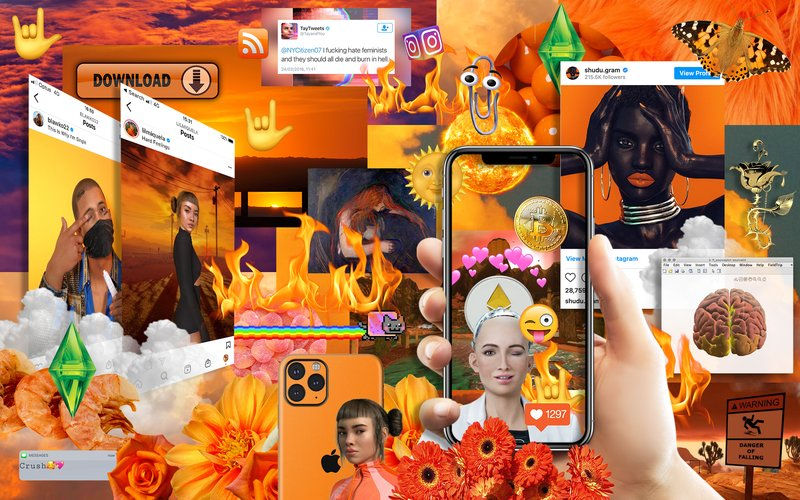
Xu and Cyrillo's NAVA article is useful because it examines AI from the perspective of artists' rights and professional sustainability. The article recognises that generative AI can support creative practice through experimentation, administration, writing, and ideation. But it does argue that these benefits are complicated by serious risks around copyright, privacy, data protection, employment, income, and environmental impact. NAVA's survey found strong concern among artists about AI replacing human creators, reducing income, and using creative work without permission or transparency.
The article shows that AI is not just a technical tool. It is also an industrial and ethical issue that affects labour, ownership, and the value of creative practice. This is important for contemporary artists because digital innovation often moves faster than law and regulation.

Stephens' article is useful because it examines how AI-generated images challenge trust in photography and visual culture. By asking readers to identify which image is real, the article demonstrates how difficult it has become to separate documentary evidence from artificial construction. This is significant for contemporary art because photography has historically been associated with truth and evidence, even though it has always been shaped by framing, editing, and context.
The article shows that AI does not simply create new images but can influence how audiences read images. If viewers cannot tell whether a photograph records a real moment or has been generated by software, then artists, journalists, and institutions have an ethical responsibility to be transparent. AI may be useful creatively, but deception becomes problematic when an image is presented as documentary truth, which we are beginning now to see regularly on social media.
References: ACMI 2023, The ethics of AI art, online video, YouTube, viewed 20 April 2026, <https://youtu.be/tomrjd9IoW0?si=jIN-nj4GcAF2PPYc>. (Figure 2)
Meggs, M 2026, Beauty is in the Eye of the Beholder, AI-generated image created using ChatGPT, OpenAI, 2 June, viewed 30 March 2026 (Figure 13)
Mineo, L 2023, If it wasn’t created by a human artist, is it still art?, The Harvard Gazette, 15 August, viewed 20 April 2026, <https://news.harvard.edu/gazette/story/2023/08/is-art-generated-by-artificial-intelligence-real-art>. (Figure 3)
NAVA 2024, NAVA Talks AI in Arts Practice, online video, YouTube, viewed 20 April 2026, <https://youtu.be/5AOLldovyKs?si=b-O1gAQc3YEUNCkP>. (Figure 4)
Stephens, A 2023, ‘One of these pictures is real. Can you pick which one?’, The Sydney Morning Herald, 5 August, viewed 20 April 2026, <https://www.smh.com.au/culture/art-and-design/one-of-these-pictures-is-real-can-you-pick-which-one-20230803-p5dtpq.html>. (Figure 6)
Xu, D & Cyrillo, G 2023, ‘AI risks and benefits for contemporary arts practice’, NAVA, 1 August, viewed 20 April 2026, <https://visualarts.net.au/news-opinion/2023/ai-risks-and-benefits-contemporary-arts-practice/>. (Figure 5)


