T4 WORKS IN PROGRESS: SCHOOL BREAK
- Apr 19
- 2 min read

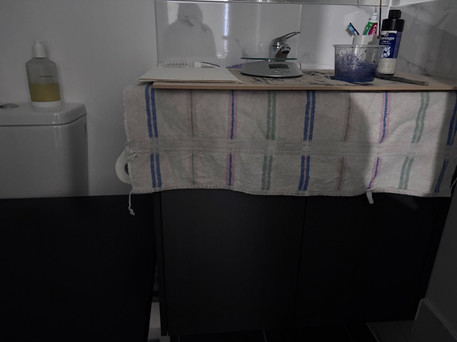
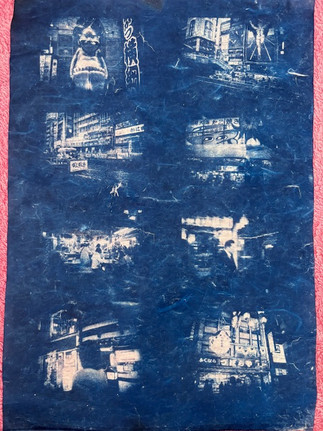
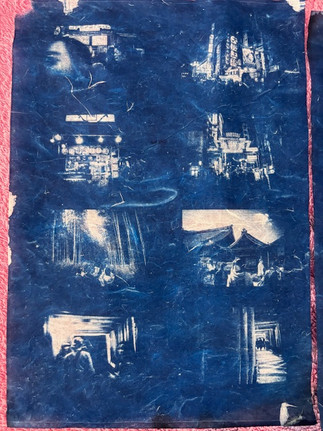
Over the two-week school break, I developed a strict daily routine so I could produce the large number of cyanotypes needed for my project. Each morning, I got up at 7am and began by painting the light-sensitive cyanotype emulsion onto rice paper in my makeshift darkroom, which I set up in my ensuite. I coated 11 sheets each morning, which took approximately 45 minutes. I then left the paper to dry until around 10am before placing the dried sheets into a black photographic bag to protect them from light.
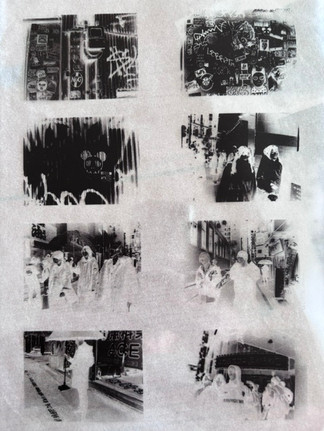
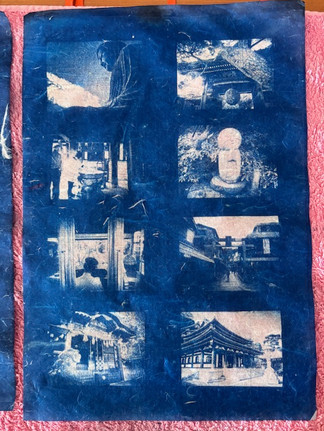
Once the sheets were dry, I began the exposure process. I placed each negative onto the rice paper under glass, then took it outside into the sunlight to develop. The exposure time changed depending on the UV level each day, but on average each sheet needed around 10 minutes in the sun. After exposure, I washed each cyanotype for approximately three minutes before placing it into a hydrogen peroxide bath to deepen the blue. Through testing, I found that two capfuls of hydrogen peroxide gave me the dark blue tone I wanted.
I repeated this process for 11 sheets of rice paper each day. The routine usually carried me through until around 2pm, when the UV levels would begin to drop and the exposures became less reliable. I continued this process every day for 14 days. By the end of the school break, I had produced approximately 400 small cyanotypes and 66 sheets that would be joined together to create the larger cyanotype image.
This period was physically and mentally demanding, but it became an important part of the work. The repetition of coating, drying, exposing, washing, and developing created a disciplined daily process. It also made me more aware of how much the work depended on time, light, weather, and my own physical capacity. The school break became less of a break and more of an intensive production period that allowed the project to move forward at the scale I needed.