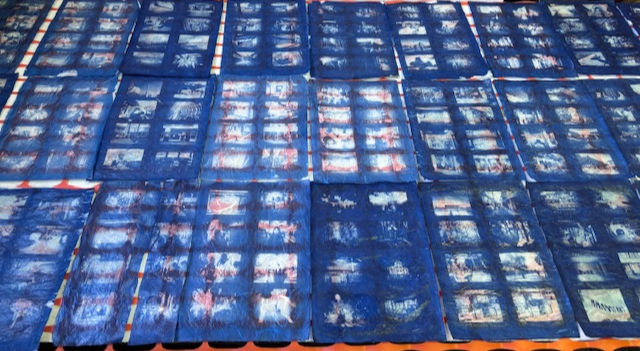
T4 WORKS IN PROGRESS: hand-stitching the large cyanotype
- May 16
- 2 min read

The decision to hand stitch the larger cyanotype image was both practical and conceptual. Initially, stitching emerged as a method for joining together multiple sheets of cyanotypes on Japanese rice paper to create a larger image than could be produced as a single cyanotype. Throughout the making process, stitching became much more than a construction technique.
The repetitive act of passing needle and thread through the paper introduced a meditative process that mirrored the themes of the project. Living with chronic illness has created ongoing changes to both my mobility and cognition, and the process of stitching became a way of engaging the connection between hand and brain. Each stitch required concentration, coordination, and patience, transforming the making process into a form of rehabilitation as well as artistic production.
Throughout, I was asked multiple times why I did not simply use a sewing machine. While a sewing machine would have been faster and more efficient, speed was never the point. For me, the value existed in the slowness of the process. I wanted to spend time with the work, making decisions stitch by stitch and maintaining control over how the image came together. The act of hand stitching also carried a personal connection, reminding me of my grandmother sitting quietly sewing her tapestries. In this way, stitching became connected not only to memory within the artwork itself but also to memories from my own life.
Conceptually, stitching also reflects ideas of repair and preservation. The image itself depicts a woman suspended between presence and disappearance, while the visible seams reveal the labour required to hold the image together. Rather than concealing the joins, I chose to leave them visible as evidence of construction.





Figures 2-7. detailed shots of the stitching and seams, and an overhead process shot of row 1 half completed, 2026.