T4 WORKS IN PROGRESS: notable changes
- May 15
- 3 min read
Updated: Jun 5


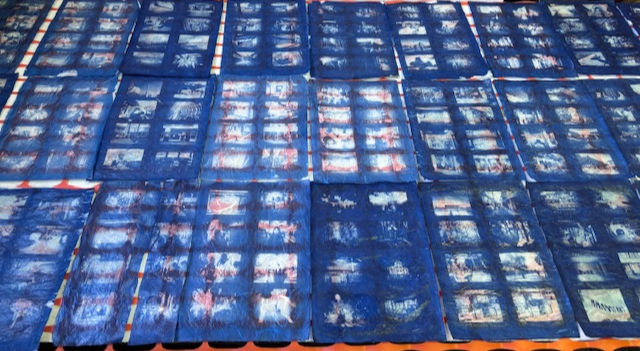
Figures 2-3. 30/3 Mockup of timber grid painted neon orange.
Timber grid to safety barrier mesh
Originally, I intended the photographs to be organised within a timber framework, with calico or muslin stretched across its surface. While this approach emphasised order and containment, it remained relatively formal and static. The introduction of orange safety barrier mesh transformed the work conceptually. The mesh carries an immediate visual language of warning, restriction, containment, and controlled movement. These associations directly relate to the limitations imposed by chronic illness. At the same time, the holes within the mesh introduced a new metaphor for memory loss, creating literal gaps through which images appear, disappear, and fragment. The contrast between the fluorescent orange mesh and the deep blue cyanotypes created a visual tension that was absent in the original timber grid proposal.


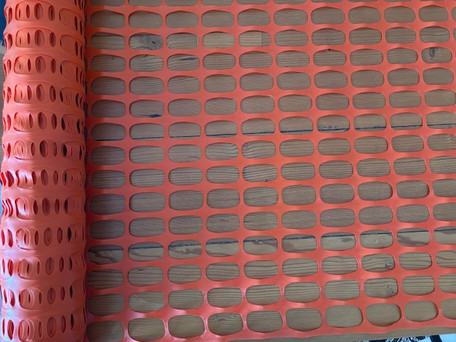
Figures 4-6. Testing if material was going to adhere to the plastic, and if the idea was conceptually successful.
Cotton to rice paper
During this stage of testing, I realised that cotton was not the right material for the cyanotypes. Although I had originally considered using fabric because of its softness and connection to the noren curtain idea, the cotton did not give me the feeling I wanted. It felt too heavy and too ordinary for the direction the work was taking.
This was the point where I decided to move toward Japanese rice paper instead. Rice paper offered a stronger conceptual and visual connection to the project. It carried a direct relationship to Japan, where the photographs were taken, and also connected more closely to the philosophy of mu. The material felt delicate, translucent, and fragile, yet surprisingly strong once handled.
This decision shifted the work away from the original fabric-based curtain idea and toward a more fragmented, hand-constructed installation.
Two large artworks to one installation
The work also shifted from being conceived as two large artworks to becoming a single installation. In the proposal, the noren curtain and cyanotype grid were described as separate pieces connected by common themes. In the final outcome, the photographs, rice paper, stitching, gluing, and safety barrier mesh operate as one continuous environment. This change reflects the influence of multidisciplinary artists whose installations position images within larger spatial systems rather than presenting them as isolated objects. Installation became the most effective way to communicate mu, because the meaning emerges through the interconnected relationships between the images, gaps, materials and the viewers' interactions.

Title Change
Renaming the work from the title Beyond Footsteps to Mu (無) Part 1 also acknowledges that this installation is the beginning of a larger, evolving body of work that will continue across the full length of the safety barrier mesh.
The original title emphasised walking, the physical act of movement, and the possible loss of movement, reflecting my focus on the pause between steps. While that remains important, the final title places the philosophical concept of mu at the centre of the work. The project has expanded to explore mu (無) more deeply as a space where meaning remains open, unresolved, and continually shifting. It holds uncertainty without attempting to solve it. This speaks directly to my experience of living with a changing mind and body.