T4 WEEK 3: GENERATING IDEAS, MANAGING TIMES
- Feb 23
- 6 min read
Updated: Apr 8

The complexity of Interdisciplinary techniques and practices:
Today focused on the role of interdisciplinary practice and how combining different media can expand artistic thinking. Contemporary art rarely operates within a single medium. Instead, artists move between photography, sculpture, performance, installation, and digital media depending on what the work requires. Interdisciplinary practice therefore becomes less about technique and more about method. The artist selects materials and processes based on the conceptual problem they are investigating.
There is an emphasis that interdisciplinary work could push the boundaries of creative expression because each medium carries its own language. When these languages intersect, they produce unexpected outcomes. Photography may introduce time and documentation, sculpture introduces physical presence, and installation introduces spatial experience. When these are combined, the work moves beyond representation into an encounter with the viewer.
However, interdisciplinary practice also introduces complexity. Artists must understand multiple technical processes, manage material experimentation, and maintain conceptual clarity across different forms. Without a strong conceptual framework, interdisciplinary work can easily become disjointed. The key challenge is maintaining coherence so that the various materials and methods serve a single conceptual investigation.
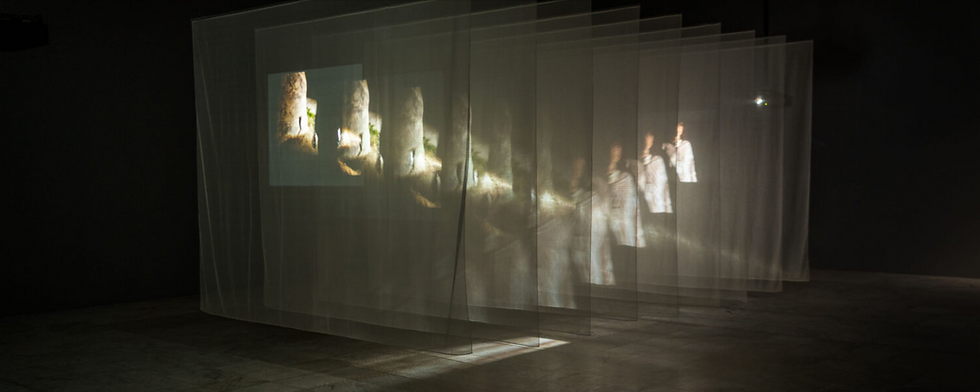
This is all highly relevant to my practice. My work already moves between photography, cyanotype printing, and installation. Each material contributes to the conceptual investigation of uncertainty and bodily negotiation.
Organisation and time management for artists:
Secondly, we examined the practical reality that artists must manage time, deadlines, and long-term planning. Artistic practice often appears spontaneous, but in reality, sustained work requires strong organisational structures.
The lecture introduced project timelines, milestone planning, and scheduling as tools that support creativity rather than restrict it. Time management allows experimentation to occur within a framework that ensures work is completed. This is particularly important for large projects where research, testing, and production must occur in sequence.
One challenge for artists is balancing open experimentation with the pressure of deadlines. If time is not managed carefully, artists may either rush ideas before they develop fully or spend too long experimenting without reaching a resolved outcome.
For my project for this subject, this point is particularly important. My work involves technical processes such as cyanotype exposure testing, material experimentation with canvas and hessian, and installation planning. Each stage requires time for testing, drying, documentation, and evaluation. Without careful scheduling these processes could easily become chaotic.
Developing a structured timeline therefore allows me to experiment early in the semester and refine the strongest outcomes later. It also encourages early problem solving, such as identifying materials that fail technically, as I experienced with the hessian cyanotype test.
Generating ideas, testing and challenging ideas early:
Next, the lecture addressed the importance of generating ideas through experimentation rather than waiting for a perfect concept to emerge. The process of testing ideas early allows artists to identify weaknesses and refine their thinking before committing to final work.
Early experimentation also prevents the work from becoming too safe. When ideas are tested through materials, unexpected results often appear. These outcomes can challenge the artist's assumptions and lead to stronger conceptual development.
This approach aligns strongly with practice-led research. Instead of starting with theory alone, the artist allows material experimentation to inform conceptual understanding. Failed experiments are therefore not wasted effort but part of the research process.
In my own work, cyanotype testing functions exactly in this way. Exposure tests on paper, canvas, and hessian are not simply technical exercises. They reveal how the image behaves across different surfaces and how tonal shifts influence meaning. For example, the softer result on canvas may support the conceptual idea of instability and disappearance more effectively.
Testing ideas early therefore becomes a method of thinking through materials rather than simply producing images.
Resources:
Miranda July's (b. 1974 Vermont, USA) short video reflects on distraction and productivity within creative work. Rather than presenting rigid discipline as the solution, she proposes small behavioural strategies that help artists return attention to the work.
The video suggests that distraction is not necessarily a failure of focus but part of how creative thinking operates. Artists often move between concentration and wandering attention. July's approach recognises this pattern and proposes simple interventions that allow the artist to re-enter the work.
The video shows that creativity does not always come from sudden inspiration. Instead, it comes from showing up and working regularly. Doing small tasks again and again helps ideas grow and eventually turns into real work. Over time, these small efforts build into something meaningful.
In this interview, Miranda July discusses how her practice moves across film, writing, performance, and visual art. Her work demonstrates how interdisciplinary practice can emerge from curiosity rather than strategic planning.
July often begins with everyday experiences and transforms them into narrative structures. Her projects move fluidly between mediums because the idea itself determines the form it takes. This approach challenges the conventional expectation that artists must specialise in a single medium. Instead, July treats media as tools for communication.
Kiki Smith's (b. 1954 Nuremberg, Germany) work explores themes of the body, mortality, and mythology through sculpture, printmaking, and installation. Her practice demonstrates how interdisciplinary processes can deepen conceptual exploration.
Smith frequently shifts between materials such as bronze, wax, paper, and textiles. Each material carries symbolic and physical qualities that shape the meaning of the work. A key aspect of Smith's approach is her use of historical references and mythological narratives. Rather than illustrating these stories directly, she reinterprets them through contemporary forms.
The video documents Kara Walker’s installation Fortuna and the Immortality Garden (Machine) at the San Francisco Museum of Modern Art. The work continues Walker's long investigation into race, power, and historical violence. In this installation, Walker constructs a large sculptural fountain that combines allegorical figures, mechanical structures, and flowing water. The work draws from the visual language of European garden fountains and classical sculpture while confronting the colonial histories that produced those traditions.
Fountains historically symbolise wealth, power, and imperial authority. Walker appropriates this format but fills it with unsettling imagery. Figures appear trapped within the structure, while the mechanical system circulates water endlessly through the installation. This circulation becomes symbolic. The fountain operates as a metaphor for the repetition of historical systems of oppression that continue to shape contemporary society.
The work also demonstrates Walker’s interdisciplinary approach. Sculpture, architecture, engineering, and performance are combined to produce an immersive environment. The moving water and mechanical elements create a sense of constant motion, reinforcing the idea that history is not static but continuously reproduced. Rather than presenting history as something finished, Walker reveals it as an active system that continues to operate in the present. The work therefore destabilises familiar symbols and forces viewers to reconsider the histories they represent.
The exhibition HELLO, MY NAME IS – (2022) by Nadia Lee Cohen (b. 1992 Essex, United Kingdom) at Deitch Gallery explores identity, performance, and constructed image culture. In this series, Cohen portrays a range of fictional characters, transforming herself through costume, makeup, and carefully constructed sets. Each photograph becomes part of a stylised narrative world where identity is not fixed but performed.
Drawing on references from cinema, advertising, and American popular culture, Cohen constructs highly controlled environments that resemble scenes from a film. The images feel theatrical and slightly surreal, blurring the boundary between reality and fiction. Through this approach, Cohen highlights how photography can function as a form of storytelling rather than simple documentation.
In this video, Yung Ma discusses the work of Haegue Yang (b. 1971 Seoul, South Korea) in relation to the exhibition Leap Year at the Southbank Centre. The discussion explains how Yang's installations combine everyday materials such as venetian blinds, metal structures, lights, and sound to create immersive environments. Her work explores themes of movement, migration, and cultural exchange, often reflecting her experience of living between different countries. Rather than presenting a fixed narrative, Yang's installations invite viewers to move through the space and experience the work through their bodies and senses, allowing meaning to emerge through encounter rather than explanation.
References:
Art21 2024, Interpreting Life, Death, and Mythology: Kiki Smith's Sculptures, online video, YouTube, viewed 24 February 2026, <https://youtu.be/FxYwShyZiUg?si=MYsXv417mQH6ot1z>. (Video 3)
Art21 2023, Miranda July in "Friends & Strangers" | Art in the Twenty-First Century, online video, YouTube, viewed 24 February 2026, <https://youtu.be/7dMGWporaFE?si=QUB41h0AkRAN6kIb>. (Video 2)
Contemporary Art Review Los Angeles 2022, Nadia Lee Cohen at Jeffrey Deitch, Contemporary Art Review LA, viewed 24 February 2026, <https://contemporaryartreview.la/nadia-lee-cohen-at-jeffrey-deitch/>. (Figure 1) Eric Minh Swenson Art Films 2022, Nadia Lee Cohen at Deitch Gallery LA, online video, YouTube, viewed 24 February 2026, <https://youtu.be/bDRemTDn-Eo?si=tHRJ9mRjtfYVfELc>. (Video 5)
Nowness 2011, Miranda July – A Handy Tip for the Easily Distracted, online video, YouTube, viewed 24 February 2026, <https://youtu.be/Yc57X0j_UwM?si=wz3eglYy83YZJy4->. (Video 1)
San Francisco Museum of Modern Art 2024, Kara Walker: Fortuna and the Immortality Garden (Machine), online video, YouTube, viewed 8 March 2026, <https://youtu.be/ONUNf6N9jvA?si=mg29LiB84xUfZZx->. (Video 4)
Southbank Centre 2024, Explore the works of Haegue Yang with Leap Year curator Yung Ma, online video, YouTube, viewed 8 March 2026, <https://youtu.be/10DhK0tTUpI?si=LLoQpU8i6BSbE0iK>. (Video 6)