

INDUSTRY WK 10: content development
- Apr 30
- 3 min read

This week focused on how creative practitioners and organisations develop and distribute content to engage audiences across contemporary cultural and commercial contexts. The discussion examined audience engagement through social media, videos, photography, artwork, and promotional materials such as posters, while also considering collaborative professional models involving commissions with designers, developers, and commercial industries such as hotels.
Audience engagement has become central to contemporary creative practice. Social media platforms such as Instagram, TikTok, and YouTube allow artists and organisations to bypass traditional gatekeepers and communicate directly with audiences. Videos, photography, digital artwork, and promotional graphics operate not only as marketing tools but also as extensions of artistic identity and storytelling. This shift reflects how contemporary audiences increasingly consume culture through visual and digital media. Content development therefore becomes part of the artistic process itself, shaping how work is interpreted, circulated, and remembered.
One of the major benefits of social media and digital content is accessibility. Artists can build international audiences without requiring representation from galleries or publishers. Regular content also creates visibility and audience familiarity, which can support exhibitions, publications, sales, funding opportunities, and community engagement. Video content in particular allows audiences to access behind-the-scenes processes, artist interviews, installation documentation, and project development, creating a sense of connection and transparency between artists and viewers.
However, there are also disadvantages. Social media platforms operate through algorithms that privilege constant visibility and fast consumption. This can pressure artists into producing content continuously rather than focusing on slower creative development. Artistic practice risks becoming shaped by trends, engagement metrics, and audience expectations instead of experimentation or conceptual depth. There is also the issue of oversaturation, where artists compete within highly crowded digital environments, making sustained visibility difficult. In this context, content can become disposable, quickly consumed and forgotten.



Figure 2. Wimbledon Art Studios, 30 Video Ideas for Artists to Grow on Instagram
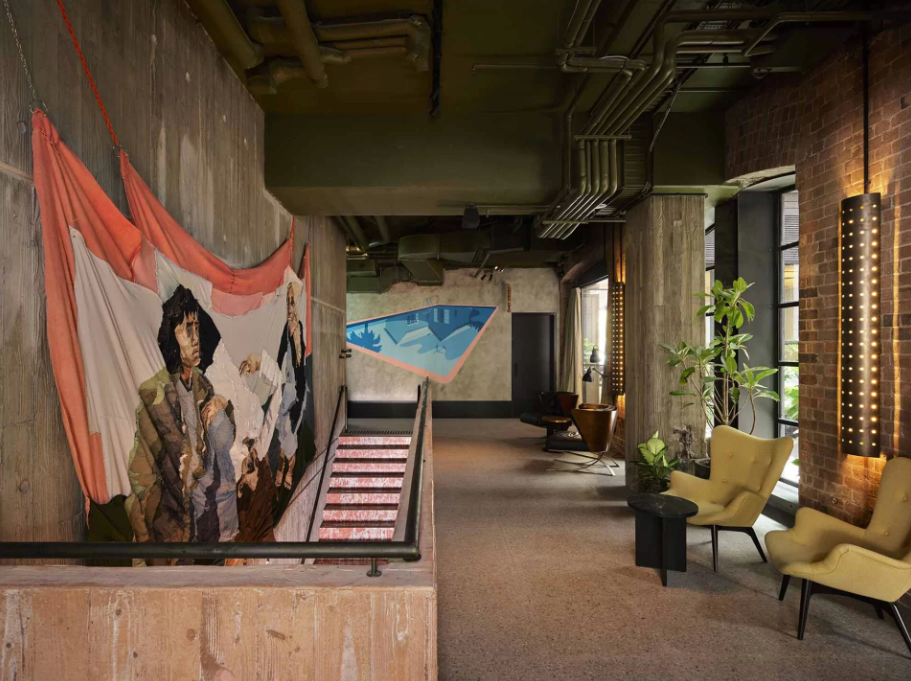
The discussion also examined commission-based collaborations between artists, designers, developers, and commercial industries. Increasingly, hotels, hospitality spaces, and architectural developments commission artists to produce site-specific artworks, murals, installations, or photographic works that contribute to branding and atmosphere. Hotels such as Ace Hotel and 21c Museum Hotel have become recognised for integrating contemporary art into their identity and visitor experience.
The video In Frame: The Man Behind the Museum Hotels explores the relationship between hospitality, contemporary art, and commercial space through the development of museum hotels that integrate curated artworks into the visitor experience. Rather than treating art as decoration, the discussion positions artworks as part of the hotel’s cultural identity and atmosphere. This reflects a broader shift within the creative industries where hospitality venues increasingly collaborate with artists, curators, and designers to create immersive and marketable environments.
A major strength of this model is that it creates alternative platforms for artists outside traditional gallery systems. Hotels become semi-public exhibition spaces where audiences encounter contemporary art within everyday environments. These collaborations can provide artists with financial support and opportunities to work on large-scale or site-specific commissions. For hotels, the integration of art strengthens branding and cultural prestige while differentiating the venue within a competitive tourism and hospitality market.
Despite these advantages, there are critical concerns surrounding commercial collaboration. Artists may face limitations imposed by branding requirements, client expectations, or marketability. In some cases, creative freedom becomes secondary to decorative function or commercial appeal. This risks reducing artwork to aesthetic enhancement rather than critical or conceptual practice. There is also the broader issue of art being absorbed into capitalist systems where cultural production becomes tied to luxury, consumption, and corporate identity.
References:
Flack Studio 2022, Ace Hotel Sydney, viewed 29 April 2026, <https://flack.studio/projects/sydney/?from=/project-category/commercial/>. (Figures 1 & 3)
Flack Studio n.d., Flack Studio website, viewed 29 April 2026, <https://flack.studio>.
Heavrin, E 2023, In Frame: The Man Behind the Museum Hotels, YouTube, viewed 29 April 2026, <https://youtu.be/Hu41-jdo3kE?si=kBb2PFbpI-UkdC6Z>. (Figure 4)
Wimbledon Art Studios n.d., 30 video ideas for artists to grow on social media, viewed 29 April 2026, <https://www.wimbledonartstudios.co.uk/articles/30-video-ideas-for-artists-to-grow-on-social-media>. (Figure 2)
