T5 WEEK 3: DIGITAL IMAGING
- Feb 28
- 8 min read
Updated: Apr 8

Week 3 examines the expanded field of photography, digital imaging and animation as contemporary artistic methodologies. The focus is not limited to technical proficiency but extends to conceptual integration, interrogating how software, algorithms, and mobile applications function as aesthetic collaborators rather than neutral tools.
Through the study of artists such as Avery Singer, David Hockney, Amy Sillman, Kara Walker, Deborah Kelly, Loretta Lux, and Joan Ross, the week situates digital practice within broader art-historical and theoretical contexts.
Avery Singer
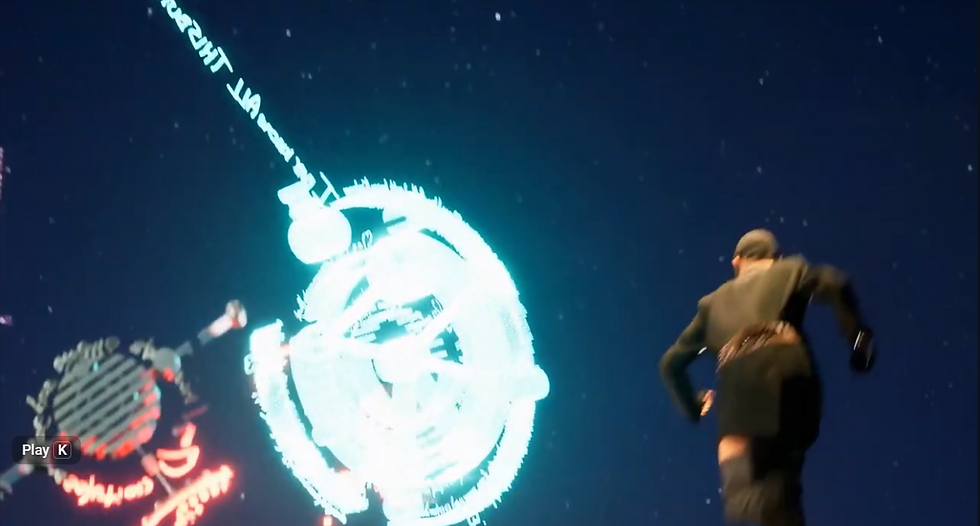
Avery Singer (b. 1987, New York) is a contemporary American painter whose practice interrogates the convergence of digital modelling technologies and the history of painting. Educated at the Städelschule in Frankfurt and the Cooper Union in New York, Singer has developed a distinctive methodology in which compositions are constructed in 3D modelling software before being translated onto canvas through airbrush techniques in a predominantly grayscale palette. This process foregrounds the structural logic of digital space while maintaining painting as a critical site of inquiry. Her work examines how contemporary subjectivity is mediated by screens, software, and architectural environments, often referencing art-historical tropes alongside digital aesthetics. By collapsing distinctions between virtual rendering and material surface, Singer positions painting not as a resistant analogue form but as a responsive system that absorbs and reflects the conditions of computational image production.
.
Medium Article - How Artists Connect with Digital versus Physical Painting: The Case of David Hockney

The Medium article analysing the relationship between digital and physical painting through the practice of David Hockney advances the argument that digital tools function as an extension of established painterly inquiry rather than as a departure from tradition. By focusing on Hockney’s engagement with drawing applications on the iPad, the text positions digital painting within a continuum of observational practice. The portability, immediacy, and responsiveness of the device are framed as enabling forms of perceptual attentiveness consistent with Hockney’s longstanding investigation into perspective, space, and temporality.
The article contributes to contemporary discussions on materiality and mediation by reframing digital painting as an adaptive continuation of painterly practice. Its strength lies in contextualising technological adoption within artistic continuity.
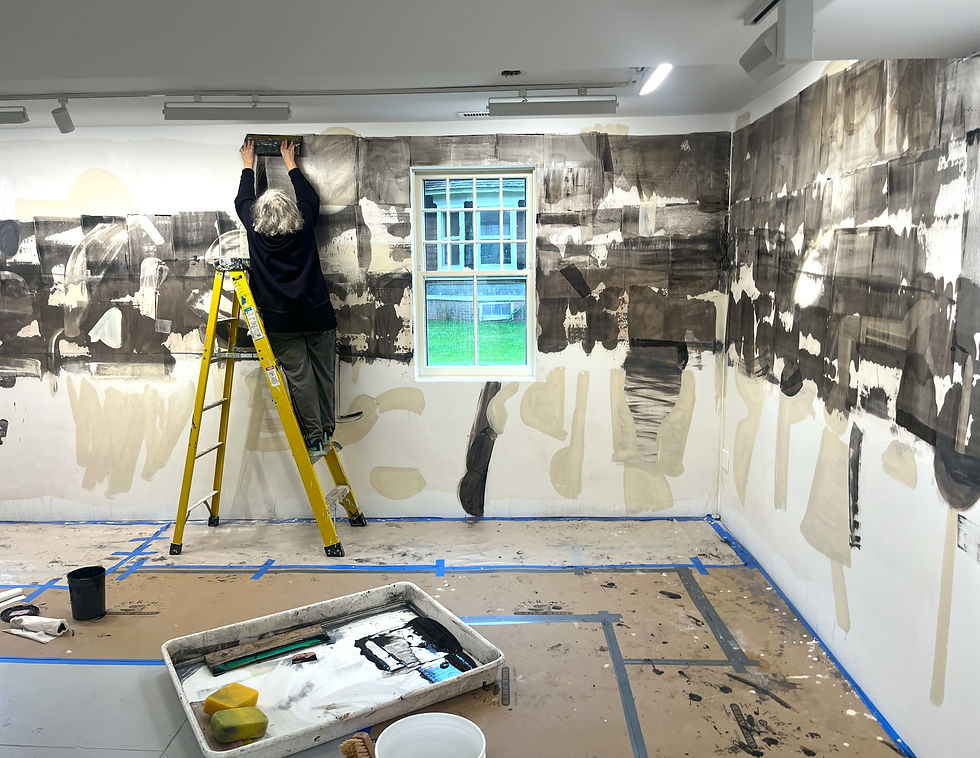
Amy Sillman (b. 1955, Detroit) is a New York–based painter whose practice reconfigures abstraction as a process of sustained inquiry rather than stylistic allegiance. Educated at the School of Visual Arts and Bard College, Sillman emerged in the 1990s as part of a generation reassessing gestural painting through revision, instability, and humour. As articulated in Amy Sillman: To Abstract (Art21 2024), her methodology foregrounds drawing as a thinking tool, where forms are layered, erased, digitally reworked, and reanimated. In recent years she has extended her practice through iPad drawings, digital animations, zines, and print-based experimentation, integrating scanning, projection, and sequential editing to test how abstraction operates across time and media. Her exhibition Alternate Side: Permutations 1–32 at Dia Art Foundation, Bridgehampton, exemplifies this expanded approach: conceived as a painted, printed, and drawn improvisational environment, the installation functions as a spatial extension of her printmaking logic, structured through permutation and serial variation, and notably designed to be painted out at its conclusion. This ephemerality reinforces her commitment to process over permanence. Across painting, print, and digital animation, Sillman positions abstraction as mutable, provisional, and materially responsive, insisting on revision and transformation as central to contemporary painterly practice.

Kara Walker (b. 1969, Stockton, California) is an American artist known for her large-scale cut-paper silhouettes and installations that confront histories of slavery, racial violence, sexuality, and power in the United States. Educated at the Atlanta College of Art and the Rhode Island School of Design, she rose to prominence in the 1990s for panoramic black silhouette works that appropriate nineteenth-century portrait traditions while exposing the brutality embedded within them. The video Kara Walker at the MAC: 24 Jan – 27 Apr 2014, produced by The MAC Belfast, talks about the immersive and spatial impact of her installations, where stark black forms are staged against white walls to create theatrical, unsettling narratives. The silhouette operates as both aesthetic reduction and political strategy: the absence of interior detail intensifies stereotype and projection, implicating the viewer in the act of interpretation. By inserting violent and uncomfortable imagery into institutional spaces, Walker destabilises historical narratives and challenges the perceived neutrality of the museum. The video frames her practice as formally disciplined and politically charged, positioning her work within critical debates on representation, memory, and the enduring presence of historical trauma in contemporary visual culture.

Deborah Kelly
Deborah Kelly is an Australian interdisciplinary artist whose practice spans video, collage, performance, and activism, engaging critically with nationalism, gender, queer identity, and political power. Educated at the University of New South Wales and active since the 1990s, Kelly is recognised for her collaborative and research-driven projects that interrogate dominant historical narratives and cultural mythologies. In the video produced by ACMI, discussing The Gods of Tiny Things, Kelly outlines her method of digital video collage, in which archival images, film fragments, and popular media are meticulously cut, reassembled, and animated to construct alternative mythologies. The work appropriates visual material from colonial and nationalist iconography, displacing heroic figures and reconfiguring them into fluid, hybrid, and queer embodiments. Technically, the layering and compositing of moving image fragments foreground the constructed nature of representation. You can sometimes see where pieces join, and this shows that she is deliberately changing and reclaiming the original material. Critically, Kelly’s practice exposes how visual culture has historically naturalised authority and exclusion, and her re-editing strategies function as acts of resistance that reassign agency to marginalised subjects. The video shows us that she values working with others and sharing ideas, seeing art as something created together rather than by one person alone.


Loretta Lux (b. 1969, Dresden, Germany) is a German photographer whose meticulously constructed portraits of children have become central to contemporary staged photography. Trained initially as a painter at the Academy of Visual Arts in Munich, Lux brings a painterly sensibility to her photographic practice, digitally compositing figures and backgrounds to create seamless yet subtly uncanny environments. Emerging in the early 2000s, her work gained international attention for its quiet, hyper-controlled aesthetic in which children appear isolated within sparse landscapes or neutral interiors.
Lux photographs her subjects in the studio and then digitally merges them with separately constructed or photographed settings, manipulating colour, scale, and perspective to achieve a surface of artificial perfection. Critically, her practice interrogates innocence, vulnerability, and the cultural construction of childhood. The stillness of her subjects, combined with their direct gaze and ambiguous expressions, produces a tension between fragility and psychological self-possession.
While the work references traditions of nineteenth-century portraiture and early photographic realism, its digital compositing underscores the instability of photographic truth. Rather than documenting reality, Lux fabricates it, exposing the medium’s capacity for control and idealisation. Her images resist overt narrative yet evoke unease, inviting viewers to question their assumptions about protection and the aestheticisation of youth.

Joan Ross (b. 1961, Glasgow, Scotland) is a Scottish-born Australian artist whose multidisciplinary practice spans painting, digital animation, video, sculpture, and installation, critically examining the visual and ideological legacies of British colonisation in Australia. Migrating to Australia in childhood and educated at the University of Sydney, Ross has developed a distinctive aesthetic language in which fluorescent yellow figures, derived from colonial-era imagery, inhabit digitally manipulated landscapes. This artificial yellow functions as a conceptual marker, identifying colonial agents as intrusive and historically constructed presences rather than neutral protagonists. Ross frequently appropriates and reconfigures nineteenth-century pastoral painting, inserting animated interventions that expose the violence, environmental exploitation, and cultural erasure embedded within these romanticised depictions of settlement. Through digital compositing and looping video sequences, she destabilises the authority of historical representation, revealing landscape painting as a vehicle for colonial ideology. Her work operates through irony and exaggeration, using saturated colour and absurd gestures to unsettle inherited narratives of national identity. By merging traditional painterly references with contemporary digital technologies, Ross reframes the Australian landscape not as a site of picturesque belonging but as contested terrain shaped by power, displacement, and ongoing historical consequence.

Looking at editing apps and mobile imaging platforms shows how image manipulation is now part of everyday life. Filters, algorithms, and automatic adjustments are built into the way we make and share photographs, which makes me think more carefully about who is really shaping an image and how "truthful" a photograph actually is. It reminds me that images are constructed, not simply captured.
For me, working with these digital tools feels experimental and generative. They are not just technical add-ons but practical tools that help me find new ideas and solve visual problems. When I go down the rabbit warren of these applications, I often discover unexpected effects or structures that shift my thinking. In that sense, the software becomes a source of inspiration, much like studying successful artists does. It pushes me to see differently, test variations quickly, and rethink composition and form within my own practice.
References:
ACMI 2021, Deborah Kelly on video collage artwork The Gods of Tiny Things, online video, YouTube, viewed 28 February 2026, <https://youtu.be/rMWhH75IFMY?si=3nSWV-Ym02guJCqU>. (Video 5)
Amy Sillman n.d., News, Amy Sillman website, viewed 28 February 2026, <https://www.amysillman.com/News/>. (Figure 3)
Art21 2026, Avery Singer: artwork survey, Art21, viewed 28 February 2026, <https://art21.org/gallery/avery-singer-artwork-survey>. (Figure 1)
Art21 2017, Avery Singer’s Next Painting, online video, YouTube, viewed 28 February 2026, <https://youtu.be/S--jnnbhOeE?si=w_5UFY1aT76H9IDg>. (Video 1) Art21 2024, Amy Sillman: To Abstract | Extended Play, online video, YouTube, viewed 28 February 2026, <https://youtu.be/MxNIf8bz9Jk?si=8EqMj191QgutB97W>. (Video 3)
Chatel, M 2019, How artists connect with digital versus physical painting: The case of David Hockney, Medium, viewed 28 February 2026, <https://medium.com/danae/how-artists-connect-with-digital-versus-physical-painting-the-case-of-david-hockney-a85b23f1c9a1>. (Figure 2)
Dia Art Foundation 2024, Amy Sillman: Alternate Side (Permutations 1–32), viewed 28 February 2026, <https://diaart.org/exhibition/exhibitions-projects/amy-sillman-alternate-side-permutations-132-exhibition>. (Figure 4)
Joan Ross n.d., Joan Ross, official website, viewed 28 February 2026, <https://joanross.com.au/>.
Joan Ross 2023, Don’t Let Leaves into Your House, Bett Gallery, Hobart, exhibition webpage, viewed 28 February 2026, <https://joanross.com.au/Don-t-let-leaves-into-your-house-Bett-Gallery-Hobart-2023>. (Figure 9)
Kara Walker n.d., Kara Walker Studio, official website, viewed 28 February 2026, <https://www.karawalkerstudio.com/>. (Figure 5)
Loretta Lux n.d., Loretta Lux, official website, viewed 28 February 2026, <https://lorettalux.de/>. (Figures 7-8)
Michael Reid Gallery 2013, Touching Other People’s Butterflies – Joan Ross, online video, YouTube, viewed 28 February 2026, <https://youtu.be/NyuFqG3su6k?si=m7VBycwwgp_28DU5>. (Video 6)
Sotheby's 2024, Avery Singer’s Journey into the Digital Frontier | Expert Voices, online video, YouTube, viewed 28 February 2026, <https://youtu.be/IjaK42Om3IA?si=XEloBuSxWZ60woKW>. (Video 2)
The MAC Belfast 2014, Kara Walker at the MAC: 24 Jan – 27 Apr 2014, online video, YouTube, viewed 28 February 2026, https://youtu.be/5QbXdPv-O1g?si=AGqNUsfZ8U1n0rM8. (Video 4)