

T5 WK 5 WORKS IN PROGRESS: the resin pour
- Mar 11
- 2 min read

This week I completed my first resin pour for Life in Pieces, documenting each stage of the process.
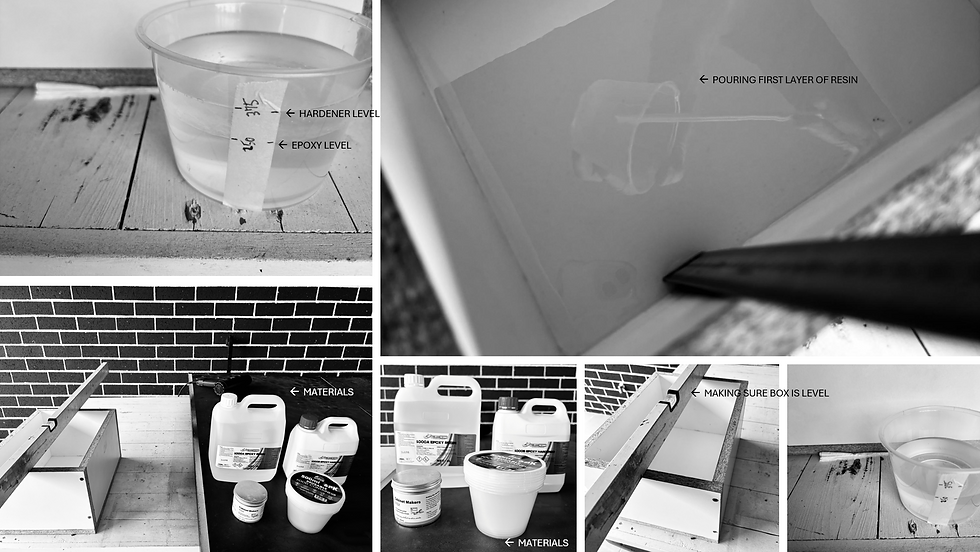
As shown in Figure 2, I began by measuring the resin and hardener using a measuring cup filled with water to determine the correct volumes. I then transferred these measurements into a plastic container, which I chose so it could be discarded after pouring. Figure 1 also shows the first layer of resin being poured into the mould, with the box levelled beforehand to ensure an even surface.


Figures 3 and 4 show the outcome after curing. The resin did not fully set. As you can see, it remains soft, even after three days. The surface appears uneven, with visible marks and inconsistencies, indicating that the chemical process did not complete correctly.
Following this, I contacted the supplier, who first tested the batch to ensure it was not faulty. They then telephoned me to confirm that the batch was fine and provided troubleshooting advice to help achieve optimal results.
The process requires precise weighing with scales of the resin and hardener to maintain the correct ratio. Temperature control is also critical, with the recommended range between 22°C and 28°C.
The mixing method was another key issue. The resin should be mixed in a figure-eight motion for three minutes, left to rest for one minute, and then mixed again in a figure 8 for a minute before pouring. This helps ensure a consistent mixture and reduces trapped air.
To improve the working conditions, the resin was left to cure in a controlled environment within the walk-in robe. By covering the doorway with a curtain, a more stable temperature was maintained, and airflow was reduced during the setting process.
Air bubbles were also addressed using a hair dryer, applied carefully to avoid overheating the surface.
Although the first pour was unsuccessful, it provided a clear understanding of the material’s requirements. The outcome highlights the importance of precision, timing, and environmental control when working with resin. This process will inform the next stage, where I will apply these adjustments to achieve a stable and fully cured result.


